
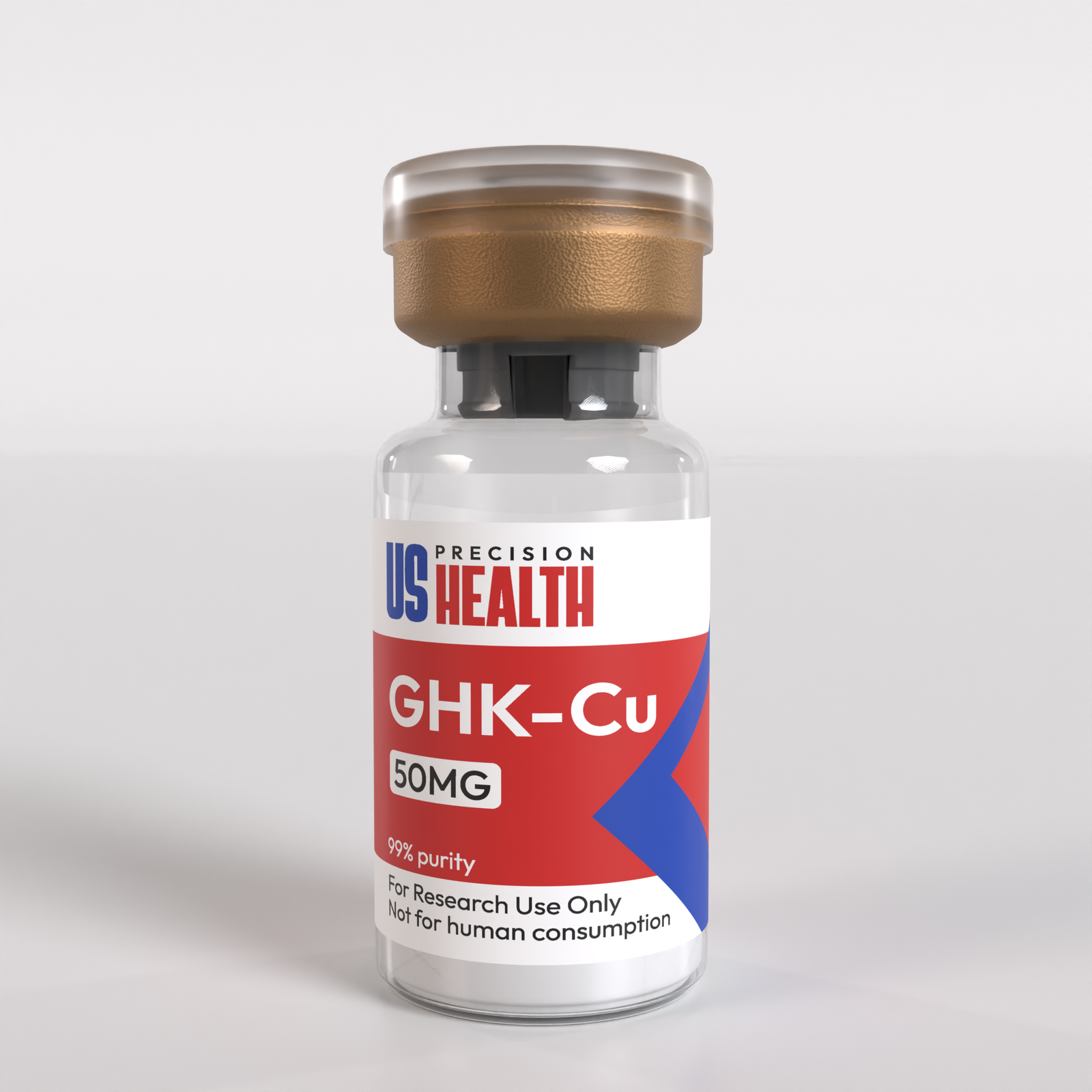
GHK-Cu – Research Grade Copper Peptide (50 mg)
GHK-Cu (Glycyl-L-Histidyl-L-Lysine Copper Complex) is a
naturally occurring copper-binding tripeptide supplied as a research-grade
compound intended exclusively for controlled laboratory and in-vitro
research environments. It consists of the tripeptide GHK complexed
with a divalent copper ion (Cu2+).
In experimental research settings, GHK-Cu is studied in non-clinical models
focusing on peptide-metal interaction dynamics, molecular signaling behavior,
and biochemical pathway analysis. Due to its defined peptide sequence and
metal-binding properties, it is utilized in laboratory systems examining
peptide stability, coordination chemistry, and molecular response mechanisms
under strictly controlled scientific conditions.
This compound is supplied exclusively for laboratory research, analytical
testing, and in-vitro scientific investigation. It is not intended for human
or animal use and is not approved for therapeutic, diagnostic, cosmetic, or
medical applications.
For research use only. Not for human or animal consumption.
Chemical & Peptide Information
| Compound Name | GHK-Cu (Copper Tripeptide-1) |
| Peptide Sequence | Gly-His-Lys (GHK) |
| Complexed Ion | Copper (Cu2+) |
| Peptide Length | 3 Amino Acids |
| Molecular Weight | ~340 Da (GHK-Cu complex) |
| Chemical Class | Copper-Binding Peptide Complex |
| Content | 50 mg per vial |
| Form | Lyophilized Powder (Research-Grade) |
Research Overview
In experimental and preclinical research contexts, GHK-Cu is examined in
laboratory systems investigating peptide-metal coordination chemistry,
molecular signaling pathways, and biochemical response behavior. All studies
are conducted exclusively within non-clinical, in-vitro research environments
designed for scientific investigation.
Key Research Focus Areas
- Peptide-metal interaction studies
- Molecular signaling pathway research
- Biochemical coordination chemistry analysis
- Peptide stability and degradation research
- In-vitro experimental peptide models
All information associated with GHK-Cu is derived from experimental and
preclinical research contexts only. No claims are made regarding medical,
therapeutic, cosmetic, or clinical outcomes.

Reviews
There are no reviews yet.